Are these tools the next leap in productivity or are we being too hasty?
Recently, I had the pleasure of attending a screening of the certified sci-fi classic 2001: A Space Odyssey at my local independent cinema, as part of a Stanley Kubrick mini season. The movie, originally released in 1968, was ground-breaking for the sci-fi genre, as, up until that point, sci-fi movies had been dominated by not-so-serious, kitschy adventures, like Forbidden Planet. 2001 set a new precedent for the genre, one where sci-fi can be sensible, intellectual and profound.
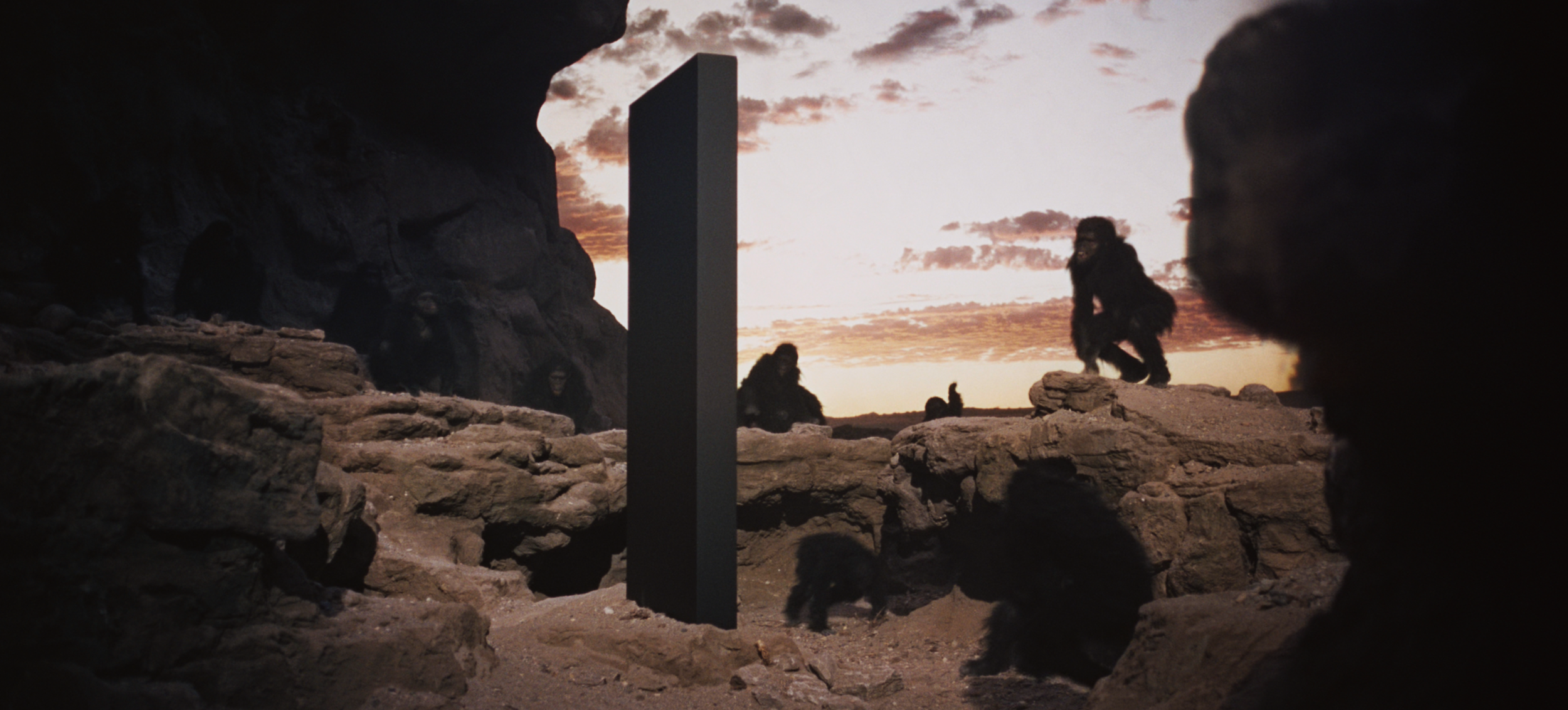
The central conceit of the film revolves around the evolution of humankind, and the steps we take in search of human progress. Mysterious black monoliths appear throughout the film which either represent, or kick-start, this progress as a species. Initially, the monolith appears to primitive humans as they learn to use tools for the first time (ominously a weapon is seen to be the first tool utilised), and later on as a beacon on the moon which projects our protagonists further in search of a signal on Jupiter.
It is then these leaps in human intelligence which led me to draw the comparison between the monoliths and disruptive technologies within my area of work, software engineering. And that’s before we even get to see the HAL-9000. The first black monolith could perhaps represent the invention of the internet, which has transformed every aspect of life and, of course, productivity. Now, the new kid on the block, AI & LLMs, seem to be claiming that they are indeed the next monolith to push us beyond in our search for productivity. Many large companies are hailing AI tools as bolstering productivity by margins of magnitudes we have not seen for a long time, but is this entirely true?
Even from cursory research, it is clear that the true value of these tools is still unclear. Whilst it is generally accepted that these AI tools can help write code, shortening repetitive tasks or create boilerplate code, there are also many areas of concern. Studies have shown that relying on these tools, such as Claude Code, can lead to reduced critical thinking and decreased engagement with the work undertaken. Anthropic themselves produced a study where they concluded that over utilising and relying on AI ‘comes with trade-offs’. Moreover, if reliance on these tools increases then the ability for ‘developers’ to validate any code output could reduce too.
As with any space-going sci-fi, these new technologies are not something that we should blindly launch ourselves into. The ambiguity around the trade-offs with using these tools is something that should be treated cautiously and thoughtfully. We should not fear AI, but maybe we should be aware of the unintended impacts and the knock-on effects we are yet to fully perceive. During the journey to Jupiter in 2001: A Space Odyssey, in the midst of an antennae malfunction, the infamous AI assistant HAL states that ‘It can only be attributable to human error’. If anything, then, we should clearly endeavour to not prove him right.